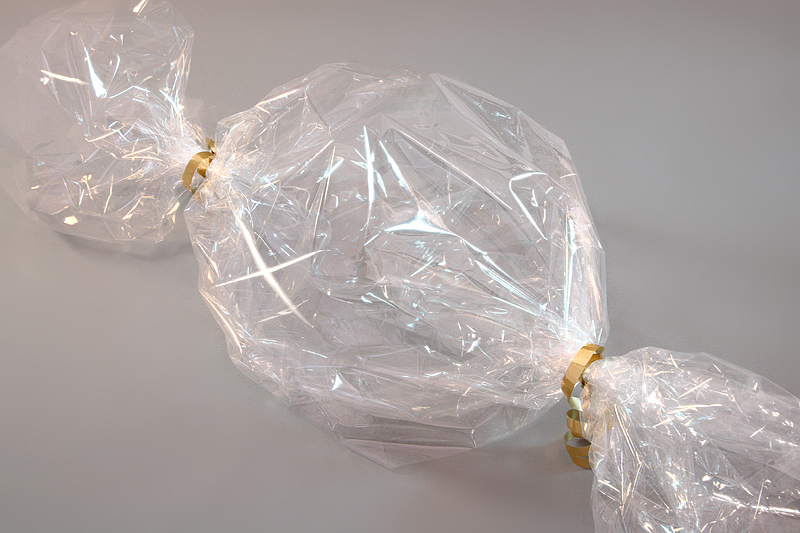
The term "bioplastic" covers a broad range of materials that differ significantly in origin, properties, and end-of-life behaviour. In Polish retail and food packaging, three main categories appear with increasing frequency: PLA-based materials, starch blends, and PHA-based polymers. Each has distinct characteristics that affect whether they are a practical choice for a given product.
PLA (Polylactic Acid)
PLA is derived from fermented plant sugars — typically corn starch or sugarcane — and is one of the most commercially available bioplastics globally. In Poland, it appears in food packaging such as cups, lids, trays, and transparent windows in cardboard boxes. PLA is transparent and has properties similar to conventional PET plastic, making it visually familiar to both producers and consumers.
The critical limitation of PLA is its composting requirement. PLA requires industrial composting at temperatures above 55°C to break down within a reasonable timeframe — typically 90 days under EN 13432 conditions. At lower temperatures, including most home compost bins, PLA degrades very slowly, sometimes taking years. It cannot be recycled through standard plastic streams because it contaminates PET recycling.
EN 13432 is the European standard for packaging recoverable through composting and biodegradation. Products meeting this standard can degrade under industrial composting conditions, but this does not mean they will degrade in soil, water, or standard household compost.
Starch Blends
Thermoplastic starch (TPS) and starch-polyester blends are used for bags, films, and loose-fill packaging. These materials typically combine starch from potato, corn, or wheat with a biodegradable co-polymer such as PBAT (polybutylene adipate terephthalate). The resulting material is more flexible than PLA and generally more suitable for home composting conditions.
Potato starch, in particular, is relevant to Poland given the country's significant potato cultivation. Some Polish producers source starch locally for packaging film production, though the majority of bioplastic materials sold in Poland are still imported from manufacturers in Germany, Italy, and the Netherlands.
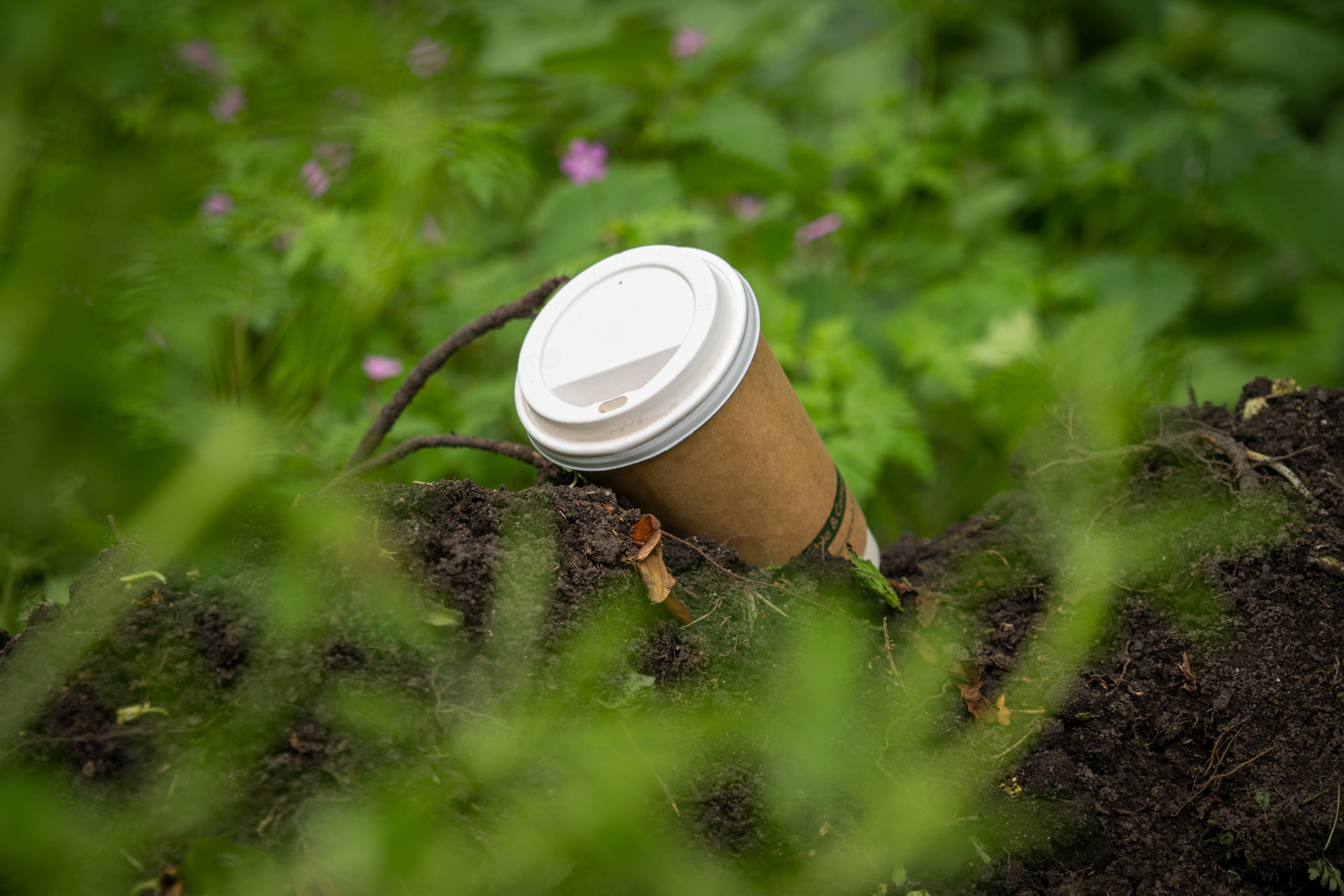
A biodegradable coffee cup in a natural setting. Source: Wikimedia Commons (CC BY-SA)
PHA (Polyhydroxyalkanoates)
PHA is produced by microorganisms that store carbon compounds under nutrient-limited conditions. It is genuinely biodegradable in soil and marine environments — a significant difference from PLA and most starch blends. PHA-based packaging is more expensive to produce and therefore rarer in everyday Polish retail, but it is beginning to appear in niche food packaging and single-use cutlery marketed toward the catering sector.
The European Bioplastics association (European Bioplastics e.V., based in Berlin) publishes annual market data on bioplastic production capacities. Their reports indicate PHA is the fastest-growing bioplastic category by investment, though absolute volumes remain smaller than PLA.
Certification Marks to Look For
When buying products in Poland that claim to be compostable or biodegradable, specific certification marks indicate independently verified standards:
- OK Compost Industrial (TÜV Austria) — verified industrial compostability per EN 13432.
- OK Compost HOME (TÜV Austria) — verified home compostability at ambient temperatures.
- OK Biodegradable SOIL — verified biodegradation in soil, without defined timeframe for full breakdown.
- Seedling label (European Bioplastics / DIN CERTCO) — meets EN 13432 for industrial composting.
Products labelled only as "biodegradable" without a third-party certification mark are not regulated by a specific standard in the EU and the term alone does not indicate anything about the timeframe or conditions required.
Sorting Bioplastics in Poland
One of the practical complications for consumers in Poland is how to sort bioplastic packaging. As of 2026, the general guidance from Polish municipal waste management authorities is to place bioplastics in the residual waste (black) bin unless the packaging specifically indicates it should go in the bio-waste (brown) bin — and only then if the local municipality accepts bioplastics in that stream.
Placing PLA in the yellow (mixed recyclables) bin causes contamination at sorting facilities because automated sorting equipment typically cannot distinguish PLA from PET. Some sorting facilities in Poland use near-infrared (NIR) sensors that can identify PLA, but this capacity is not universal. The practical recommendation, absent local guidance to the contrary, is that PLA packaging goes to residual waste.
What Polish Producers Are Using
Several Polish food companies have introduced bioplastic packaging for specific product lines — most commonly for organic food, delicatessen products, and prepared meals sold in specialist retailers. Kraft paper bags with a PLA window (replacing conventional plastic windows) are among the most common hybrid formats seen in Polish organic food stores.
The introduction of extended producer responsibility (EPR) obligations under Polish law — implementing EU packaging directives — means producers are increasingly obligated to report on the recyclability and compostability of their packaging, which is driving gradual shifts toward better-documented materials.